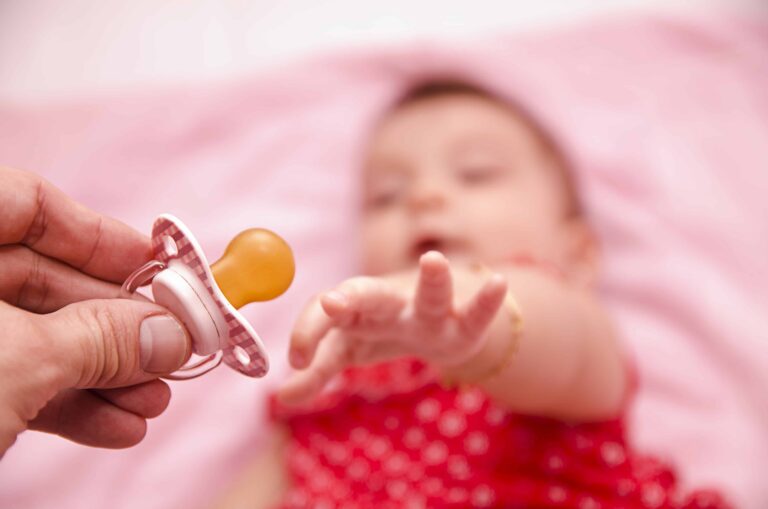
Pacifiers and Baby Sleep: Pros, Cons & When to Wean
Many parents wonder:
-
Should I introduce a pacifier?
-
Will it become a bad habit?
-
Will it affect my baby’s teeth?
-
Does a pacifier help or hurt sleep?
-
How will I ever take it away?
As a birth doula and sleep consultant serving families in Boston and beyond, this is one of the most common questions I hear.
The truth? Pacifiers can be incredibly helpful — when used intentionally.
Let’s break it down.
Benefits of Pacifier Use for Babies
Pacifiers offer both short-term soothing benefits and long-term developmental advantages.
Research and pediatric organizations like the American Academy of Pediatrics support pacifier use, especially for sleep.
Evidence-Based Benefits of Pacifiers
-
Reduced risk of SIDS (Sudden Infant Death Syndrome)
-
Satisfies the non-nutritive sucking reflex
-
Promotes relaxation and endorphin release
-
Encourages sleep and self-soothing
-
Offers comfort during stress (doctor visits, travel, car rides)
Non-nutritive sucking (sucking without feeding) is a powerful neurological regulator for infants. It helps calm the nervous system and promotes sleep readiness.
Bottom line: The benefits of pacifier use generally outweigh the downsides — especially in the first year.
But if your baby never takes one? That’s completely okay. Pacifiers are optional, not mandatory.
When Can I Give My Newborn a Pacifier?
If you are breastfeeding, it’s best to wait until:
-
Breastfeeding is well established (typically by 2 weeks)
-
Baby has regained and exceeded birth weight
-
Milk supply is stable
-
Diaper output is strong
In the early days, if a baby wants to suck, feeding at the breast should come first.
After a full feeding (typically ~20 minutes), if your baby is calm and showing signs of comfort sucking rather than hunger, offering a pacifier is appropriate.
If your newborn spits it out and continues fussing, they may still be hungry — always rule out hunger first.
Pacifiers and SIDS Prevention
The American Academy of Pediatrics recommends offering a pacifier at sleep times to reduce the risk of SIDS.
Pacifiers may:
-
Help maintain lighter sleep states
-
Keep the tongue positioned forward
-
Reduce airway obstruction risk
If the pacifier falls out after baby falls asleep, there is no need to replace it during the newborn stage.
How to Introduce a Pacifier
Some babies take one easily. Others need encouragement.
Pacifiers that apply gentle pressure to the palate (like BIBS or Natursutten) often work well because they stimulate the sucking reflex.
Tips to Help Baby Accept a Pacifier
-
Offer it when baby is calm and not overly hungry
-
Make sure it touches the roof of their mouth
-
Gently press against the center of the tongue
-
Encourage sucking with soft circular motions
If baby gets frustrated, stop and try another time. Never force it.
When Does a Pacifier Become a Sleep Crutch?
In the newborn stage (0–3 months):
No — it is not a bad habit.
Around 4–5 months, dependency can develop if baby requires you to replace the pacifier every time it falls out.
I call this “pacifier ping-pong.”
If you’re reinserting it multiple times per night, it may be contributing to fragmented sleep.
How to Prevent Pacifier Dependency
-
Use the pacifier for falling asleep
-
Avoid automatically replacing it throughout the night
-
Gradually encourage self-settling skills
If you’re actively sleep training, we may adjust pacifier use depending on the method you’re using.
Teaching Your Baby to Replace the Pacifier
Around 5–6 months, babies develop the pincer grasp, allowing them to intentionally pick up small objects.
This is when you can teach independent pacifier replacement.
Step-by-Step Pacifier Teaching
Step 1: Place pacifier in baby’s hand and guide it to their mouth
Step 2: Place it in their hand and let them bring it independently
Step 3: Put baby down without it; encourage them to find it
Step 4: Gradually stop helping
You can progress through the steps at a pace that feels good to you (no need to rush, especially if your baby is under 6 months). At bedtime, you can place several pacifiers in the crib to increase the chances they’ll find one on their own.
If you give space for independent soothing, many babies will either find the pacifier or discover their fingers/hands instead.
When & How to Remove the Pacifier
There are several appropriate timing options for removing the pacifier. The “right” time depends on your goals, your child’s temperament, and how dependent they’ve become.
Option 1: Remove at 4–6 Months
Some families choose to remove the pacifier early to prevent dependency and avoid frequent night wakings.
You can remove it cold turkey at this age. Expect a short adjustment period while your baby develops alternative soothing strategies (hands, fingers, rolling, etc.). If your baby struggles to fall asleep independently without it, sleep training can be especially helpful during this transition.
This approach avoids the “pacifier ping-pong” phase entirely.
Option 2: Remove or Limit by 12 Months
If you don’t want your child using a pacifier into the toddler years, removing it before 12 months can make things much easier.
Around this age, object permanence is fully developed. This means your baby understands that the pacifier still exists — even when they can’t see it — which can make removal more emotionally challenging after 12 months.
In general, it is much easier for a baby under 12 months to go cold turkey than it is for an 18-month-old or 2-year-old.
If you’re not ready to remove it completely by age one, that’s okay — there’s no urgent medical rush. Many pediatric dentists recommend limiting pacifier use to sleep only by 12 months.
A helpful rule:
Pacifiers stay in the crib.
Use them for naps, bedtime, and occasional high-need situations (travel, illness, long car rides), rather than throughout the day.
Option 3: Remove Between 3–4 Years Old
If you decide not to remove the pacifier in infancy, it can sometimes be easier to wait until around age three rather than removing it during the 18–30 month window.
Toddlers under three often struggle to sleep without it and may even drop naps prematurely — even when they still physiologically need that daytime sleep.
By age three, children are more developmentally capable of:
-
Understanding explanations
-
Participating in the plan
-
Transitioning to new soothing strategies
-
Responding to incentives or rituals
You’re also able to communicate clearly and get their buy-in.
Most dentists recommend eliminating pacifier use by age four to prevent long-term dental changes, so if your child is under three, there is generally no medical urgency to remove it immediately.
How to Remove a Pacifier Gently
Consider introducing a lovey 4+ weeks before removing the pacifier.
How to Introduce a Lovey
-
Place it between you during feeds and cuddles
-
Rub it on your face and baby’s face
-
Model affectionate attachment
-
Include it at naps and bedtime
Attachment takes time — consistency matters.
For children 3+, you can:
-
Trade it for a “big kid” toy
-
Have a small goodbye ceremony
-
Create a keepsake baby box
-
“Send it” to another baby in need
Validate big feelings. Saying goodbye can be emotional — and that’s normal.
Pacifier Safety Guidelines
If you offer a pacifier, always follow guidance from the American Academy of Pediatrics:
-
Use one-piece pacifiers
-
Avoid cords or clips during sleep
-
Inspect regularly for wear
-
Never dip in sweet substances
You can review full safety guidelines at HealthyChildren.org.
Final Thoughts: Are Pacifiers Good or Bad?
Pacifiers are neither good nor bad.
They are tools.
When used intentionally, they can:
-
Support sleep
-
Reduce SIDS risk
-
Encourage self-soothing
-
Provide powerful emotional regulation
The key is using them thoughtfully — and knowing when it’s time to phase them out.
Need Personalized Sleep Support?
If pacifier dependency, frequent night waking, or sleep training questions feel overwhelming, I’d love to help.
As a Boston-based birth doula and pediatric sleep consultant, I support families from newborn through age 10 using a variety of approaches tailored to your parenting style.
👉 Explore our Boston sleep consulting and child sleep support services.
